Spirituality In Politics

  • Home
  • Intro
  • Articles Index
    • Introductory
      • 1. Metaphysics in a Spiritual Society
      • 2. The Spirit of Guidance
      • 3. Divination
      • 4. Raynor C. Johnson: The Imprisoned Splendour
    • Articles 2: Headline Policies for a Spiritual Society
      • Education
        • The Importance of Fairy Tales
        • The Importance of Fairy Tales, Part 2 – Fairy Tales and Feminists
        • Fairy Tales and Feminism – the Story of Psyche
        • Fairy Tales and Feminism — the Story of Psyche, Interpretation
        • Save Our Fairy Tales — Concluding Remarks
    • ARTICLES 3: MORE DETAILED IDEAS
      • Politics from a Taoist Perspective – Arguing for the Centre
      • Politics from the Centre — Is that the only way forward?
      • Changing the World – Spirituality or Socialism?
      • The Superorganism – a Challenge to Materialist Science
      • Is the Earth a Superorganism?
      • Humanity as Part of the Superorganism
    • Articles 4 The Role of the Citizen
      • The Role of the Citizen in a Spiritual Society
      • Reflections on Eastern and Western Spirituality
    • The Superorganism Question and the European Union
    • A Vision for a Spiritual United Kingdom Outside the European Union
    • Consciousness
      • Is the Self an Illusion – Series Introduction
        • Is the Self an Illusion? – Neuroscience, Gurdjieff and Buddhism
        • Is the Self an Illusion? – The Opposing Viewpoint
        • Is the Self an Illusion? — Yes and No
        • Is the Self an Illusion? — Summary and Conclusions
      • The Hidden, Deeper Self - Introduction
        • The Hidden, Deeper Self - Freudian Slips
        • The Hidden, Deeper Self - Dreams
        • The Hidden, Deeper Self – Synchronicity
        • The Hidden, Deeper Self - Automatic Writing
        • The Hidden, Deeper Self – Divination
    • Why Christianity Must Change or Die – Introduction
      • Christianity Must Change or Die — Gnosticism and Carl Jung
      • Significant Moments in Church History – Introduction
        • Number 1, The Council of Nicaea, 325AD
        • Number 2 – The Anathema Against Origen, 553 A.D.
          • Reincarnation and Christianity
    • Was Jesus Divine? – Introduction
      • Was Jesus Divine, the Son of God? – 1. The Adoptionist Problem
      • 2. The Jewish Messiah
      • 3. The Eschatological Prophet
      • 4. Shakespeare’s Heretical Play
      • 5. The Resurrection of Jesus – part 1
      • Was Jesus Divine, the Son of God? - Summary and Conclusions so far
      • 6. Was Jesus Married?
      • 7. Was Jesus Married? — part 2
      • 8. Was Jesus Married? — part 3
  • Blog Introduction
    • Blog Index
    • Religion and Spirituality
    • Politics
    • Science
    • Mythology
    • Miscellaneous
  • Contact

1859 — a Crossroads in the History of Science

25th December 2018

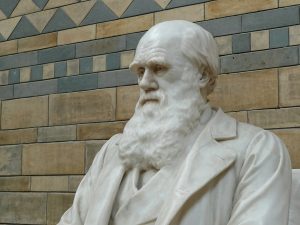
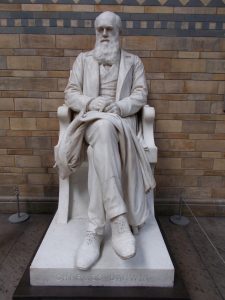
    1859 was the year in which the first edition of Charles Darwin’s Origin of Species was published. He had been putting this off for a long time, but felt pressurised when he discovered that Alfred Russel Wallace had come up with the same theory of evolution by natural selection, and did not want to be upstaged. Luckily for Darwin, it seems that Wallace was not competitive by nature, and did not feel the need to try to take exclusive credit for himself.

    Darwin’s name went on to be associated with the theory, and for a long time Wallace was forgotten. That is my first reason for claiming 1859 to be a crossroads. Science chose to celebrate Darwin, whose theory became a cornerstone of the modern philosophy of atheistic materialism. Suppose it had chosen Wallace instead; he went on to write The World of Life: A Manifestation of Creative Power, Directive Mind and Ultimate Purpose. He was therefore a believer in God and what we now call Intelligent Design. He was also a firm believer in spiritualism. What would the world look like now, if he had become the dominant theorist instead of Darwin?
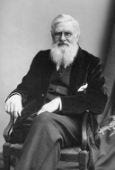
    Wallace’s role in the development of the theory of evolution has been recognised more widely in recent years, although the same thing cannot be said of his later beliefs. Extraordinarily and inexplicably, the comedian Bill Bailey, who claims to be a big fan and student of Wallace, in a BBC documentary (1) described the theory of evolution by natural selection as “one of the greatest scientific ideas of all time”, but said that Wallace had taken “a path which would ultimately lead him to deny God”. If this was not a deliberate lie, then it was ignorance on a grand scale. (I’m trying to convince myself that there isn’t some kind of sinister plot going on.)

    Less well known is that 1859 was also the year when Alexander von Humboldt died, a name almost forgotten nowadays, but a giant figure in the world of science at the time, and a prolific writer. He was “a Prussian polymath, geographer, naturalist, explorer, and influential proponent of Romantic philosophy and science”. His most important work was Kosmos, a multi-volume treatise which outlined a “holistic perception of the universe as one interacting entity”. He believed that the universe was created, and was subject to a controlling power (2). He was therefore thinking along the same lines as Wallace, and was a forerunner of James Lovelock and his Gaia hypothesis, standing in a tradition which the latter said “has been widely held throughout history and has been the basis of a belief that coexists with the great religions” (3).
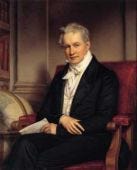
    ‘Enlightenment’ thinking has therefore promoted Darwin, and rejected Wallace and von Humboldt. If only we could go back to 1859 and choose the other road. Actually we can. If there can be a Renaissance of ancient spiritual ideas in medieval Italy, then there can be a Renaissance of the ideas of Wallace and von Humboldt in modern times. Bring it on!


Footnotes:

(1) Bill Bailey’s Jungle Hero, BBC2, April 21 and 28, 2013

(2) https://en.wikipedia.org/wiki/Alexander_von_Humboldt

(3) Gaia: a New Look at Life on Earth, 1995, OUP, Pxiv
· Evolution

The ‘Enlightenment’ — Where It Has Taken Us

29th November 2018

This post follows on from The Decline of Humanism, and continues its theme.

====================================================================================================

    The Enlightenment, as is well known, was a philosophical and scientific movement which began in the 17th century and continued through the 18th. It promoted science, reason, rejected orthodox religion, and was the dominant force in the world of ideas during that period. At the beginning it was probably a necessary development in order to move things forward, even though some of the key figures were overconfident, too certain of their conclusions. However, it has now gone horribly wrong.

    There is much that could be said but, in order to be brief, I’ll just mention one especially significant figure, Pierre-Simon Laplace, who summed up Enlightenment thinking in two famous quotes, firstly: “We may regard the present state of the universe as the effect of its past and the cause of its future. An intellect which at a certain moment would know all forces that set nature in motion, and all positions of all items of which nature is composed, if this intellect were also vast enough to submit these data to analysis, it would embrace in a single formula the movements of the greatest bodies of the universe and those of the tiniest atom; for such an intellect nothing would be uncertain and the future just like the past would be present before its eyes” (1). Secondly, it is reported that, when asked by Napoleon why he had written about all the laws of creation without mentioning God, he replied, “I had no need of that hypothesis”.

    We therefore have a theory of strict determinism, absolute cause and effect, as is implied by a materialist understanding of a physical universe subject to the laws of nature, and any understanding of God as unnecessary and irrelevant.

    The influence of this Enlightenment philosophy continues today. In my previous post  I quoted Richard Dawkins, to show what he thinks a human being is. I’ll repeat that quote here: “We are machines built by DNA whose purpose is to make more copies of the same DNA. … This is exactly what we are for. We are machines for propagating DNA, and the propagation of DNA is a self-sustaining process. It is every living object’s sole reason for living” (2).

    The renowned Harvard biologist E. O. Wilson expresses himself in identical terms: “The individual organism is only the vehicle (of genes), part of an elaborate device to preserve and spread them with the least possible biochemical perturbation. … The organism is only DNA’s way of making more DNA” (3).

    Human beings are therefore, in their view, nothing more than meaningless by-products of biological processes. The late Stephen Hawking said something similar, although his choice of words was even more provocative: “The human race is just a chemical scum on a moderate-sized planet…” (4).

    Here is the description of the human situation according to three prominent 20th century intellectuals:

  • Nobel laureate Bertrand Russell: “That man is the product of causes which had no prevision of the end they were achieving; that his origin, his growth, his hopes and fears, his loves and his beliefs are but the outcome of accidental collocations of atoms; that no fire, no heroism, no intensity of thought and feeling can preserve an individual life beyond the grave … (continues) All these things, if not quite beyond dispute, are yet so nearly certain, that no philosophy which rejects them can hope to stand. Only within the scaffolding of these truths, only on the firm foundation of unyielding despair, can the soul’s habitation henceforth be safely built”(5).
  • Nobel laureate Steven Weinberg: “The more the universe seems comprehensible, the more it also seems pointless. But if there is no solace in the fruits of our research, there is at least some consolation in the research itself. … The effort to understand the universe is one of the very few things that lifts human life a little above the level of farce, and gives it some of the grace of tragedy” (6).
  • Nobel laureate Jacques Monod: “If he accepts this message in its full significance, man must at last wake out of his millenary dream and discover his total solitude, his fundamental isolation. He must realize that, like a gypsy, he lives on the boundary of an alien world; a world that is deaf to his music, and as indifferent to his hopes as it is to his sufferings or his crimes” (7).

    So this is where the Enlightenment, which promised so much, has taken us. Perhaps the most succinct and striking summary of this attitude of modern science towards life was actually provided by a philosopher. This is the opening of Albert Camus’ The Myth of Sisyphus: “There is but one truly serious philosophical problem, and that is suicide. Judging whether life is or is not worth living amounts to answering the fundamental question of philosophy”. His suggestion is that being alive is so unpleasant that the only sensible option is to commit suicide, and the book is a rather contrived attempt to explain why we shouldn’t do so — his conclusion is that we have to imagine Sisyphus happy! (8)

    I think it is fair to assume that Russell, Weinbert, Monod, and Camus, from what they say, must have lived in a state of permanent depression. We are told that we have to respect scientists, since they are the high priests (not sexism, all the above are men) of the Enlightenment, who have freed us from the superstitions of the past. When people like you or me are depressed, this is often called an illness, which needs treating, either by drugs or psychotherapy. When an Enlightenment scientist is depressed, we are told to accept their vision, and that if we don’t agree with them we have succumbed to illusions, regressed into superstition, rather than send them off to consult a shrink. I wonder why that is. (What happens when you psychoanalyse such people will be the subject of a later article.)

    I am not in favour of seeking false comfort in illusions. If these scientists were telling the truth, I would agree that humanity should accept and face up squarely to its tragic situation. Is it possible, however, that they might be missing something? Suppose for a moment that what they are saying is not true, rather an inevitable consequence of their unremitting addiction to a materialist worldview.

    I think it is reasonable to say that there is no scientific experiment which could determine whether or not there is purpose in the universe, nor for that matter whether the sole reason for our existence is to propagate our DNA. If that is true, then all the above statements have to be considered philosophical rather than scientific, even when they are made by scientists. Their truth or otherwise can therefore be considered in the light of these scientists’ preconceptions and psychology.

    They are all prominent atheists, dedicated materialists, and often humanists (9). It is reasonable to ask therefore whether their scientific work leads them to these conclusions, or whether their atheism is the driving force behind their science. If you see the world through an atheist’s eyes before you enter a laboratory, is it not possible that this will in some way affect your work, and your conclusions?

    Here’s a very interesting quote which can help us explore that idea. Richard Dawkins once said: “The universe we observe has precisely the properties we should expect if there is, at bottom, no design, no purpose, no evil and no good, nothing but blind, pitiless indifference.” (10). Isn’t it remarkable that the universe Dawkins claims to observe is an exact manifestation of his philosophical views? The universe I observe (which is not just the physical universe), partly on the basis of experiences I have had, is full of design, purpose, and is also caring and helpful (even if it sometimes appears cruel and indifferent). My understanding might be wrong, but it goes to show that how one sees the universe depends upon one’s own background, personal psychology and preconceptions. In the language of psychotherapy, are these scientists  projecting the lack of true meaning in their own lives onto the universe?

    Spiritual people do not share this pessimism, and in general are very positive about life and the universe. I won’t go into detail, but will just mention one spiritually oriented man’s celebration of the birth of his daughter: “Hallelujah for the miracle of life!” Compare that to the depressing vision of Dawkins, Wilson, and Hawking above. These scientists would say that such a person is seeking false comfort in illusions. They might be right, but on the other hand they might just be wrong.

Conclusion

    Let me make it clear that I am not against science, as long as it is of high quality; I am grateful for the advances that the Enlightenment has brought us, both in science, and in its rejection of some religious thinking. Although the majority of quotes above are made by scientists in scientific texts, they are merely philosophy posing as science. One of the authors from my introduction to this series agrees. Mary Midgley explains what inspired her to write, and she could have been talking about the quotes in this article:

    “This book had a very simple origin. In the early 1980s I was asked to speak at a conference on ‘Evolution and Religion’. This suddenly made me wonder whether the link between these two things was perhaps closer than had been noticed. Was the idea of evolution somehow beginning to be used, not so much as an antidote against religion but as a substitute for it — indeed, as a form of religion itself?

    “I had been struck for some time by certain remarkable prophetic and metaphysical passages that appeared suddenly in scientific books about evolution, especially in their last chapters. Though these passages were detached from the official reasoning of the books, they seemed still to be presented as science. But they made startling suggestions about vast themes such as immortality, human destiny and the meaning of life. These are difficult topics with which philosophical and religious thinkers have long wrestled. But the scientific writers did not usually refer to any earlier discussions. They simply and confidently laid down their own surprising views about them. Their pronouncements seemed to be seriously intended. But it was far from clear on what level they were meant to be taken” (11 ).

    Darwinism is one of the crowning glories of Enlightenment thinking. As Charles Eisenstein puts it: “It was the genius of Darwin to explain how complex life could develop from a foundation of deterministic material laws, collapsing the last stronghold of religion” (12). In that statement we can hear echoes of Laplace above, and understand why Darwinism is so appealing to the authors I’ve quoted, and to Enlightenment thinking in general.

    If the philosophical position I have outlined above, which is not science, is where the Enlightenment has taken us, then it has gone too far, and something has gone seriously wrong. The Enlightenment may have been at its inception a necessary step forward in the progress of ideas, but it has regrettably turned into a hopeless cul-de-sac from which we need to escape. A new paradigm is long overdue, and fortunately is being outlined by many cutting-edge scientists.

====================================================================================================

Footnotes:

(1) Essai philosophique sur les probabilités, 1814

(2) https://www.azquotes.com/quote/573352. I assume this originally came from The Selfish Gene.

(3) Sociobiology; The New Synthesis, Harvard University Press, 1975, p3

(4) interview with Ken Campbell, Reality on the Rocks: Beyond Our Ken, 1995

(5) The Free Man’s Worship, 1903, https://users.drew.edu/jlenz/br-free-mans-worship.html

(6) The First Three Minutes, Flamingo, 1993, p149

(7) Chance and Necessity, Vintage Press, 1972, pp172–173

(8) Sisyphus was a mythical figure, who was subjected to an eternal punishment of having to roll a very heavy stone up a hill every day, which then fell back to the bottom.

(9) Dawkins and Wilson are prominent in modern Humanist organisations. Enlightenment science, atheism, and modern Humanism are intimately connected. For a critique of modern Humanism, please see my previous article.

(10) quoted by Michael Shermer in Scientific American, Feb. 2002, p35

(11) Evolution as a Religion, Routledge, 2002, Pviii

(12) The Ascent of Humanity, available online: https://charleseisenstein.org/books/the-ascent-of-humanity/alone-in-the-universe/


· Science

The Decline of Humanism

29th November 2018

    My starting point is a chapter in Critique of Intelligent Design by Fisher/ Clark/York (1). The (I assume publisher’s) blurb on the back of the book says that it “offers empowering tools to understand and defend critical and scientific reasoning in both the natural and social sciences and society as a whole”. Two quotes from supportive academics, chosen from a total of seven, are as follows:

  • the authors “never lose sight of the real issue which is the struggle between materialism and supernaturalism as an explanation for the world of phenomena” (Richard Lewontin, Harvard Professor).
  • “A scholarly and compelling book showing intelligent design to be an anti-Enlightenment project — and one full of illusion, superstition, and hidden reactionary agendas. Anyone interested in science and reason rather than fairy tales about a Celestial Designer should get hold of a copy” (Peter Dickens, University of Cambridge, UK).

    I hope, in the light of the above, that I do not have to spell out that this book is not about science, rather a philosophical battle between materialism and spirituality (supernatural explanations). Despite the enthusiasm of these seven academics, this book is pretty awful, and anything but scholarly. I will offer a more detailed critique in later articles.

    The chapter I have in mind is about the Renaissance and is called Enlightenment Materialism and Natural Theology. It begins: “During the Renaissance numerous long lost works of antiquity were recovered as humanists sought out the missing classics. … Poggio Bracciolini located a copy of Lucretius’s De rerum natura. … A revival of interest in Epicureanism followed, giving new impetus to materialist thought”. This historical detail may be true, although I have never heard it before, but their claim that the Renaissance was a revival of early materialist thought is the complete opposite of the truth. The Renaissance was known rather for the revival and celebration of works by authors whose views they oppose and are seeking to condemn.

    This was a period called Renaissance Humanism by later scholars, which was actually a revival of spiritual ideas: Platonism, Neoplatonism, and Hermeticism, for example. Let’s take a look at some significant figures; I believe that the following three are the most important.

Petrarch

    Perhaps the best known name now is Petrarch (1304–1374), who sought out ancient manuscripts, and attempted to reconcile them with Christian texts.

    Less well known names nowadays, but highly significant at the time, and more important for the purposes of this article, were:

Marsilio Ficino

    Marsilio Ficino, (1433–1499), who was especially interested in Plato and Neoplatonism — that’s about as spiritual as it’s possible to be. He translated and commented on many texts, like Plutarch seeking to assimilate such ideas into Christian theology. His own writing included Platonic Theology, which was a philosophical study of the soul, Book on the Christian Religion, and tracts on astrology. He was actually ordained a priest and became a church official of Florence Cathedral. So much for a “new impetus to materialist thought”!

Giovanni Pico della Mirandola

    Giovanni Pico della Mirandola (1463–1494), whose most famous work is Oration on the Dignity of Man, part of his attempt at a synthesis of all religious schools of thought — pagan, Christian, Islamic and Jewish — thus an early Perennial Philosophy. Does this sound like someone who was seeking to give new impetus to materialist thought? In case anyone thinks I am misrepresenting the three materialist authors, this text has been described as “the manifesto of humanism”, and “the most succinct expression of the mind of the Renaissance”, the primary meaning of which was “the rebirth of man in the likeness of God” (2).

    So what are we to make of our three authors’ statement? Are they merely ignorant, or are they deliberately lying? Whatever the answer, they lack intellectual credibility, despite the praise heaped on them by the seven academics; if writers have to resort to such a deception, why should anyone accord them any respect? This is what happens, I believe, when fanatics are not interested in the truth, only in converting others to their own ideas.

    What actually triggered “a new impetus to materialist thought” was not Renaissance Humanism, rather the so-called ‘Enlightenment’ (or, as I would prefer to call it, the New Dark Ages), with its exaggerated emphasis on science and reason, and its rejection of religion and spirituality in favour of a materialist philosophy, all of which our three authors are obviously promoting.

    Alongside this development, and presumably a consequence of it, was a change in the meaning of the word Humanism. When the Enlightenment took over, we ended up with a Humanism devoid of any spirituality, and appropriated by  Darwinism.

    There is more that I could say, but the most obvious evidence for this is that arch-Darwinian atheist Richard Dawkins is the Honorary Vice-President of Humanists UK. Here is his estimation of what it means to be human: “We are machines built by DNA whose purpose is to make more copies of the same DNA. … This is exactly what we are for. We are machines for propagating DNA, and the propagation of DNA is a self-sustaining process. It is every living object’s sole reason for living” (3). In similar vein, he has also written that an elephant is a roundabout way of making elephant DNA. By extension therefore, a human being is a roundabout way of making human DNA. If we are merely machines for propagating human DNA, a further step would be to say that the genius of Beethoven’s 9th symphony, Bach’s B minor mass, Titian’s paintings is a meaningless, accidental by-product of human DNA propagating itself. I hope I don’t need to explain why I think this is madness.

Conclusion

    This is my personal take on what has happened:

    Originally Humanism was a celebration of humanity as spiritual beings created, as Genesis put it, in the image of God. Although Shakespeare came later, the attitude of Renaissance Humanism is summed up by these words of Hamlet: “What a piece of work is a man! How noble in reason! how infinite in faculties! in form and moving how express and admirable! in action, how like an angel! in apprehension, how like a god! the beauty of the world! the paragon of animals!” (Act II, scene 2).

    Humanism now means something like, in the absence of God humans taking centre stage, elevating humans to the status of gods, without having to take into account any higher powers. This will obviously sound reasonable to many, but to me reveals a naïve, over-optimistic view of human nature, failing to take into account the dark side. Let me make it clear that what I am about to say has nothing to do with the stated goals of modern Humanism. However, we have evidence of what happens when atheistic humans elevate themselves to the status of gods in the appalling totalitarian regimes of Stalin and Mao Tse Tung. Also, although Darwin would not have wanted it, his ideas were an inspiration for Hitler, and the Eugenics movement.

    Therefore, when modern Humanism tries to remove God and replace him/her by humans, this is potentially hubris of an ugly and dangerous kind. Let’s seek a new Renaissance of ancient wisdom in the spirit of the original Humanism.

ADDENDUM

    Since writing the above, and the follow-up post, I have been reading Reincarnation: The Phoenix Fire Mystery (4). This is a wonderful book, ostensibly a compilation of quotes and related material from believers in reincarnation down the ages, which ends up as a magnificent 500-page encyclopedia and history of spiritual thinking from Hinduism to modern times.

    My main point will follow. However, in order to further reinforce what I said above, I’ll make a brief reference to their chapter on the Renaissance, which actually begins with a section called The Italian Renaissance and the Neoplatonic Revival. As I did, they singled out Marsilio Ficino and Pico della Mirandola as highly significant figures. They also mention someone I had not heard of before, George Gemistus, known as Pletho, who was “in effect a founding father of the Italian Renaissance… chiefly memorable for having been the first person who introduced Plato to the Western world” (p243). He was “a venerable Byzantine Platonic philosopher” who gave Cosmo de Medici (the patron of the Renaissance) “the idea of founding a Platonic academy”. This is what led to Cosmo choosing Ficino “for a thorough education in Greek language and philosophy”. How can all this be described as “a new impetus to materialist thought”? (5)

    The chapter opens by referring to the Hulsean Lectures of the scholar W. R. Inge (6), who describes the Italian Renaissance thus: “It was like an awakening from a deep sleep… At the Renaissance the dropped threads are taken up again… New worlds are opened to the seeker after truth, Galileo’s new worlds above, the new worlds of the explorers beyond the seas, and the new world of the philosophers within”.

    The authors say that “the new world within had its source in the rebirth of the philosophy of Plato and the Neoplatonists. Inge states that the Platonic tradition had never really been extinct: ‘or we may say more truly that the fire which, in the words of Eunapius, “still burns on the altars of Plotinus”, has a perennial power of rekindling itself when the conditions are favourable’ ”.

    Above I called for “a new Renaissance of ancient wisdom in the spirit of the original Humanism”. In the follow-up I said that, in the light of the depressing scenario outlined by Bertrand Russell, Stephen Weinberg, Jacques Monod, Albert Camus, Richard Dawkins, E. O. Wilson (and others), modern science has become “a hopeless cul-de-sac from which we need to escape”.

    Surely the conditions are now favourable for a rekindling of the wisdom of the ancients.

===========================================================================================

Footnotes:

(1) For details, and the context, see my Introduction.

(2) from the introduction of http://www.andallthat.co.uk/uploads/2/3/8/9/2389220/pico_-_oration_on_the_dignity_of_man.pdf

(3) https://www.azquotes.com/quote/573352. I assume this originally came from The Selfish Gene.

(4) Joseph Head & S. L. Cranston, Crown Publishers, 1977

(5) as (1), p65

(6) published as The Platonic Tradition in English Religious Thought, Longmans, Green and Co., 1926. The following quotes are on pages 21, 22, and 28.


· Science, Uncategorised

Is the Self an Illusion? – Part 2

15th August 2018


    One of the themes of my previous posts was the bizarre stances taken by modern (materialist/ physicalist) scientists — the strange, crazy things they say (1). There were two posts called The Folly of Modern Neuroscience, and Is the Self an Illusion? – Part 1

    I’ve just come across a great passage which adds to my theme. It’s by W. Macneile Dixon from The Human Situation. I found it quoted in a book called Reincarnation: The Phoenix Fire Mystery (2), where the editors describe him as “a Confucius of the West”, and say that a New York Times reviewer said “perhaps the most important book of its kind which the twentieth century has yet produced”. (I’m definitely going to do some research on him!)

    So here are his thoughts on this issue:

    “The modern and shortest way with the soul or self is to deny it outright. Can we suppose ‘that a ship might be constructed of such a kind that entirely by itself, without captain or crew, it could sail from place to place for years on end, accommodating itself to varying winds, avoiding shoals, seeking a haven when necessary, and doing all that a normal ship can?’ Yes, we are told, in the human body we have precisely such a ship, which handles itself admirably without captain or navigator.

    “You have heard of this curious doctrine, of this psychology which rejects the psyche and retains only the ‘ology’, the science of the self without the self. Thus, in summary fashion, the great authorities deny and dispose of us, and incidentally of themselves. Where we imagine the ‘I’ or self to be, there is only, they tell us, a series of fleeting impressions, sensations, fancies, pains and pleasures, which succeed each other with amazing rapidity, but without any entity over and above them that, as centre, thinks, feels or desires. It is then a mirage or hallucination, this notion of the self. And an interesting and peculiar illusion, which till yesterday successfully played the impostor’s part upon the whole human race, philosophers included. And not only so, but after this prodigious feat of deception, it laid a snare for itself and caught itself out. This illusion, the most extraordinary that ever was, discovered itself to be an illusion”.

Footnotes:

1) I am engaged in a battle against such ideas. Someone who thinks on similar lines as me is Jack Preston King on medium.com. See, for example, his article Are You Spiritual?

2) Joseph Head and S. L. Cranston (eds.), Julian Press/Crown Publishers, 1977, pp1–2. The whole book is a great resource for anyone interested in these matters.

· Blog, Science

The Case Against the Enlightenment

23rd February 2018

    I note that psychologist Steven Pinker has a new book out this week, Enlightenment Now: The Case for Reason, Science, Humanism, and Progress. It’s quite a clever title — who could actually be against any of these things? I almost feel guilty about daring to complain. In fact, all these things are so obviously desirable that one wonders why we need a book advocating them. Obviously I haven’t read it yet, but I suspect that the title does not reveal the true agenda of the book — it is more likely to be making a case against certain things, namely religion, and a spiritual understanding of the world, both of which sometimes have apparently irrational aspects to them. Here is a clue. I have a book by Professor of Anthropology Pascal Boyer called Religion Explained: The Human Instincts that Fashion Gods, Spirits and Ancestors (1). On the front cover is a quote from Steven Pinker: “a deep, ingenious, and insightful analysis of one of the deepest mysteries of the human species”. So he thinks that having a religious attitude is a deep mystery, therefore almost incomprehensible.

    So, is his new book going to be making a case for science — the objective search without preconceptions for a true understanding of the nature of the universe? Or is it going to be celebrating scientism, an over-the-top worship of rational science at the expense of seeking the truth? I hope I’m wrong but I suspect it’s going to be another tract in the tradition of those other arch-scientismists Richard Dawkins and his Foundation for Reason and Science, and Carl Sagan and his book The Demon-Haunted World: Science as a Candle in the Dark (2).

    As for reason, I hope we can all agree that it is in general a good thing. To overvalue it and start worshipping it, however, means that you end up excluding the irrational, and therefore limiting your explorations of the nature of reality. William James put it brilliantly: “…our normal waking consciousness, rational consciousness as we call it, is but one special type of consciousness, whilst all about it, parted from it by the filmiest of screens, there lie potential forms of consciousness entirely different. We may go through life without suspecting their existence; but apply the requisite stimulus, and at a touch they are there in all their completeness… No account of the universe in its totality can be final which leaves these other forms of consciousness quite disregarded” (3).

    There were obviously some very good aspects about the movement called the Enlightenment, but in its attempt to free itself from previous false beliefs it, in my opinion, threw the baby out with the bathwater. Now that it has ended up proclaiming a godless, purposeless universe seen through materialist eyes, it has become not so much enlightenment, rather an ugly black cloud blotting out the sun. Reason and science, as understood by the authors mentioned above, cannot lead to true progress; they have already led us into a cul-de-sac, from which we need to escape.

Footnotes:

(1) Vintage, 2002                                                                                                                                                                    (2) Ballantine Books, 1996                                                                                                                                                    (3) The Varieties of Religious Experience, New York: New American Library 1958, p298

· Science

Is the self an illusion? Part 1

28th October 2017

    This article is a follow-up to The Folly of Modern Neuroscience. Please note that here, when I use the terms neuroscience or neuroscientists, I am referring to the current trend towards materialism and naturalistic explanations, as outlined there, where examples can be found of the type of thing I’m talking about. I am aware that not all neuroscientists think this way – some examples can be found at the bottom of that article. It would be clumsy, however, to keep repeating this each time I use these terms.

—————————————————————————————————————————————————————————————————

    The position of neuroscience is that our sense of personal identity, the self, is an illusion. I assume that neuroscientists think this because they can’t see a self when they look at a brain down a microscope, or when examining a brain scan. From my viewpoint, they have been led astray by their materialist assumptions, and therefore cannot contemplate the possibility that the self might be non-material, thus is not generated by the brain.                                                                                                                      The existence of consciousness has been described as the most difficult problem confronting modern science and philosophy. It is also known as the “hard problem”; it is hard because no one can explain how a material organ, the brain, can be responsible for things which appear to be non-material  – thoughts and the self.                                                                                                                                                                When a problem seems insoluble, the possibility has to be contemplated that the wrong question is being asked. Perhaps the brain does not create the self. I’ll just mention in passing that the spiritual explanation for the self is that of a soul (or consciousness, if you prefer) incarnating into a body. I’ll put that thought to one side, however, and consider hypothetically the possibility that these neuroscientists may have got it right, and that the self is indeed an illusion.

    Let’s consider meditation from this perspective, an activity practised by humans for thousands of years. Put simply, the goal of meditation is for the conscious self to control and silence all thought, in order to reach a higher state of consciousness. From the neuroscientific perspective, however, this conscious self is an illusion created by the brain. Yet this conscious self has the desire to silence thoughts, the contents of the mind, which are presumably created by the brain. So the brain has created an illusory entity which wants to stop one of the main activities of the brain, the production of thoughts. Therefore one part of the brain is in conflict with another, even though the first one does not really exist. How would neuroscience explain this?

    I’ll turn now to transgender issues. The self is said to be an illusion, yet this self, which has emerged from a body born biologically as either male or female, and must therefore be genetically, psychologically, and logically either a male or female self, nevertheless feels somehow uncomfortable in its body, and feels that it is “really” a self of the other gender, which would also be an illusion. How can neuroscience explain this?                                                                                                                                                        It is interesting to note that on this issue society completely ignores the opinions of neuroscientists. The logical neuroscientific response would be to tell people with transgender feelings that what they are experiencing is nonsense, that their self is an illusion, so there would be no point in transferring to a different gender, since that self would also be an illusion. Society completely ignores this approach, however, and takes the concerns of these people seriously, offering them counselling, surgical procedures, and hormone therapy.

    I’ll now consider the arts, specifically music. Neuroscience invites us to believe that works of sublime genius like Beethoven’s 9th Symphony, and Bach’s B minor Mass, are the creations of an entity which does not really exist. We are therefore led to assume that it must actually be the brain which creates these works. This suggests that an organ which has evolved through a process of genetic mutation and natural selection without any sense of purpose, according to neo-Darwinian theory to which I assume neuroscientists subscribe, has the desire to create and the capability of producing such works. How does neuroscience explain this?

    I hope that these three examples have persuaded you of the ridiculousness of the neuroscientific position. So it is reasonable to ask whether neuroscientists have really considered the implications of their views. Do they not need to get out more, and study real life in the outside world, instead of studying brains in laboratories?.

    In each of the above examples a spiritual explanation is more credible. In the case of meditation, it is the spiritual consciousness (the soul) which wants to silence all thoughts (thus the mind), and return to its higher state of being. It is not clear to me what exactly is happening spiritually in the case of a transgender person. One possible explanation is that the soul has spent several incarnations in bodies of one gender, and unconscious memories remain which suggest to the person that they “really” belong in a body of the other gender. I suggest that the musical examples would be explained more satisfactorily by a real consciousness trying to communicate and express something profound. Neuroscientists are unwilling to contemplate such explanations, because they are addicted to materialism, and their statements can therefore seem absurd to reasonable people.

    I’ll conclude by quoting the words of an extraordinary scientist, Sir John Eccles. He was one of the leading brain scientists of the twentieth century, and was awarded the Nobel Prize for medicine in 1963. There is therefore no doubt about his credentials (or his sanity). In 1977, with Karl Popper, he published a book with an extraordinary title, in the light of the current discussion, The Self and Its Brain (1). A few years later, with Daniel N. Robinson, he wrote The Wonder of Being Human (2). He says that he was primarily responsible for chapter 3, and there, having discussed consciousness, identity, thus the “hard problem” and other alternative theories, he concluded: “Since materialist solutions fail to account for our experienced uniqueness, we are constrained to attribute the uniqueness of the psyche or soul to a supernatural spiritual creation. … It is the certainty of the inner core of unique individuality that necessitates the ‘Divine creation.’ We submit that no other explanation is tenable (all my emphases); neither the genetic uniqueness with its fantastically impossible lottery nor the environmental differentiations, which do not determine (his emphasis) one’s uniqueness but merely modify it”.

This is one of the bravest statements that I have ever come across by a modern scientist. No wonder materialist neuroscientists are at such a loss to explain the self!

Footnotes:

(1) Publisher Springer-Verlag                                                                                                                                                (2) The Free Press, 1984, the quote is on p43


· Blog, Science

Daniel Dennett part 2

16th September 2017


    In my first post on Daniel Dennett (which I assume here you have read) I restricted myself to mentioning scientists who had written prior to his book, i.e. those whom he could, and perhaps should, have been aware of. I also mentioned only those from scientific disciplines about which there could be no argument about their inclusion – biologists, geneticists, paleontologists, physicists. I also, with a couple of exceptions, chose scientists who, as far as I could tell, had no strong religious beliefs. I was trying to find scientists whose inclusion Dennett could not reasonably challenge.  Here I won’t be quite so strict, but will offer some supplementary material that I think is relevant to the ongoing debate about the truth, or otherwise, of Darwinian theories.

    Beginning with biologists, there are some whom Dennett would reject because they believe in Intelligent Design. To my mind, however, their arguments (which are scientific, and have nothing to do with religion) are at least as impressive as his. Perhaps the best known is Michael Behe, who caused something of a stir with his book Darwin’s Black Box (1). Also interesting are Michael Denton’s Evolution in Crisis (2),  and Icons of Evolution by Jonathan Wells (3). 

    Mathematicians (I believe they count as scientists) have often been highly critical of Darwinism . The argument usually follows the line that the odds against life as we know it having been organised by blind, purposeless forces, are astronomical beyond astronomical. The most striking comment along these lines was made by the astronomer Sir Fred Hoyle, who said that the chances that life on Earth just occurred and evolved by chance are about as unlikely as a typhoon blowing through a junkyard and constructing a Boeing 747 (4).              

                                                                                                              The most significant moment historically was the Wistar Symposium in 1966, its proceedings published as Mathematical Challenges to the Neo-Darwinian Interpretation of Evolution (5). This was actually a conference of mathematicians and evolutionary biologists where they aired their differences. In the discussions which have followed, the biologists are usually perceived to have lost the argument, making some ridiculous statements in the process.                                                                                                                         There is more to say about Sir Fred Hoyle, who is described as either an atheist or agnostic, astronomer and mathematician. I have just noted his rejection of Darwinian evolution on the grounds of odds. In a book called Evolution from Space, he and his colleague Chandra Wickramasinghe had a chapter called The Evolutionary Record Leaks Like a Sieve, in which they said: “The general scientific world has been bamboozled into believing that evolution has been proved. Nothing could be further from the truth” (6). The whole book is an attack on Darwinian theory as an explanation for life on Earth. 

    From other related scientific disciplines:

    Stuart Kaufmann, complexity theorist, believes that systems tend to arrange themselves in patterns, not as a result of natural selection. He thinks that Darwinism is only part of the truth (7).                                   Hubert Yockey, information theorist, argues that “the information needed to begin life could not have developed by chance; he suggests that life be considered a given, like matter or energy” (8). More recently he has said that “the origin of life in unknowable” (9).                                                       

    Sir John Eccles, neurophysiologist and Nobel Laureate (that should be enough to make him reputable in Dennett’s eyes), argued that “mind had an existence independent of the brain, that the uniqueness of individual personalities did not depend on genetics, and that science had gone too far in breaking down Man’s belief in his spiritual greatness. He considered that we were creatures with some supernatural meanings and endowed with purpose” (10). Together with Karl Popper, he wrote a book with a very interesting title, The Self and Its Brain (11).

    Philosophers are of course not scientists, but the philosopher Dennett feels competent to declaim about scientific matters, so I’ll take the liberty of mentioning the following:                                                             Eric Tomlin is admittedly not a household name, but his career included being Professor of Philosophy and Literature at Nice. He contributed an article on the subject of evolution to The Encyclopedia of Ignorance (12), called ‘Fallacies of Evolutionary Thinking’. In it he said: “The truth is that evolution was an hypothesis which hardened into dogma before it had been thoroughly analysed. Hence it mothered a number of fallacies” (his italics). His major complaint was that Darwin’s theory caught on because it met a need; it was “an attitude favoured by the sophisticated as a vindication of their belief that existence lacked purpose. Darwinism appealed to them because it provided a way to justify their belief”. He argues that this is just wishful thinking, that there is purpose in Nature. He said: “To ascribe (the development of the human brain and nervous system) to the play of blind forces is to suspend rational judgement and to betray the cause of science”. He actually says that it is “crazy” to do so (italics mine). In case we are in any doubt about what he means by that, he goes on to use the words “psychotic” and “schizophrenic” as clarification.
    These are strong words. I’m sure you can see why I have chosen to include this possibly obscure philosopher. His suggestion is that certain people, while claiming to be rational scientists objectively seeking the truth, are suffering from a severe psychological problem, in his words suspending rational judgement, in my language a desperate need to be atheists, who will say or believe anything in order to maintain their stance.

    Here is another significant philosophical moment. In 2004, before Dennett wrote his book, the renowned life long atheist philosopher Antony Flew, who had previously written Darwinian Evolution (13), arguing for it, announced that he had become a deist and a convert to Intelligent Design, saying that he “had to go where the evidence leads” (14).

    Historically, another book worthy of mention is The Great Evolution Mystery, by Gordon Rattray Taylor (15). He was not a scientist by profession, but was educated at Cambridge University, and went on to become Chief Science Advisor to the BBC, and edited its Horizon series. The book is an extensive critique of neo-Darwinian theory, easily understood by a general reader, with many scientific references.                                                                                                                                                                                                                            So, in addition to all the scientists mentioned in my previous post, the above gives you some further ideas of the situation leading up to 2006 when Dennett wrote. The story has continued afterwards:

     In 2008, the physicist Amit Goswami published Creative Evolution: A Physicist’s Resolution between Darwinism and Intelligent Design. In a chapter called ‘God and a New Biology’ he said “every modern biologist – in moments of total honesty – hears the foundation (of Darwinism) creaking” (16). (If only more biologists could be totally honest!)

    In 2012, the atheist philosopher Thomas Nagel caused something of a stir when he published Mind & Cosmos: Why the Materialist Neo-Darwinian Conception of Nature is Almost Certainly False (17).                                                                                                                                                                                                                                            In 2014, www.thethirdwayofevolution.com was launched, bringing together and publicising the work of scientists who find neo-Darwinian explanations inadequate, without resorting to theories of Intelligent Design or any other form of supernatural intervention. Dozens of names are listed there. Even if the website was only created in 2014, many of them had obviously begun their research and published earlier than 2006, when Dennett wrote. So here we have many other reputable scientists whom he chose to ignore. I especially like the articles of Stephen Talbott; see, for example, ‘Can Darwinian Evolution Be Taken Seriously? ‘ (18). Interestingly, Stuart Kauffman, mentioned above, had previously used the same term, saying that we need to look for a “third way” between a “meaningless reductionism and a transcendental Creator God” (19).    

    I could go on, as the list of doubters in both my posts is far from exhaustive. By now, however, I hope I have convinced you, in case there was any doubt, that Darwinian theories of evolution are highly controversial. So from now on, don’t let anyone tell you, contrary to what Dennett said, that science has proved beyond doubt the truth of Darwinian evolutionary theory. If you do hear that, I hope I have provided you with enough ammunition with which to fight back.

Footnotes:

1. The Free Press, 1996                                                                                                                                                           2. Adler and Adler, 1986. There is also an update Evolution Still in Crisis.                                                                3. Regnery Publishing, 2002                                                                                                                                               4. See The Intelligent Universe, Michael Joseph, 1983, p19                                                                                                5. Wistar Institute Press, 1967                                                                                                                                               6. Evolution from Space, Simon and Schuster, 1981. Quote from the Touchstone edition, 1984, p87                   7. See, for example, The Origins of Order, Oxford University Press, 1993                                                                     8. Information Theory and Molecular Biology, CUP, 1992, chapter 9, quoted by Michael Behe, Darwin’s Black Box, p29                                                                                                                                                                                   9. Information Theory, Evolution, and the Origin of Life, Cambridge University Press, 2010,  p182                             10. Malcolm Lazarus, in The Spirit of Science, Floris Books, 1998, p12                                                                         11. Routledge & Kegan Paul, 1983                                                                                                                                         12. R. Duncan and M. Weston-Smith, eds., Pergamon, 1977, quotes p228, p228, p231                                           13. 1984, Paladin Books. Revised edition 1997, Transaction Publishers.                                                                   14. Interview with Dr. Gary R. Habermas, published in the Winter 2005 issue of “Philosophia Christi” the journal of the Evangelical Philosophical Society (www.biola.edu/philchristi)                                           15. Secker and Warburg, 1983                                                                                                                                             16. Quest Books, 2008, p3.                                                                                                                                                 17. Oxford University Press, 2012                                                                                                                                     18. At time of writing this article is still available on the link but, as the website states, will at some point be retired, since it has been updated by another, ‘Evolution and the Purposes of Life’. This later article will obviously be as interesting as the original.                                                                                                               19. Reinventing the Sacred, Basic Books, 2010, p31


· Blog, Evolution

Daniel Dennett

23rd August 2017


                                                                                                                                                                                                                                                                                                                                           2009 marked the bicentenary of the birth of Charles Darwin, and his name was everywhere in the media. Newspapers carried features, and the national treasure David Attenborough presented a BBC television programme in his honour. The public’s imagination was captured; at the Natural History Museum a special exhibition Darwin’s Big Idea on any given day could be sold out.
    Yet in the media there are sometimes references to polls which reveal the percentage of people who do not believe in evolution. The number is usually perceived to be surprisingly high, given that science has now “firmly established evolution as fact”.
    Why are the public so unconvinced? The scientists’ answer may perhaps be expressed in more polite language than this, but the gist of it is that these people are too stupid to understand, and prefer to cling to false hopes that there may be a God, that life may have meaning, and on the whole don’t take the trouble to study the science, and listen to scientists and their compelling arguments.
    An outstanding example of these points is provided by the well-known atheist philosopher Daniel Dennett in this passage from his anti-religion book Breaking the Spell (1). He talks about “…those who don’t yet appreciate just how well established the theory of evolution by natural selection is. According to a recent survey, only about a quarter of the population of the United States understands that evolution is almost as well established as the fact that water is H20 ”. He calls this an “embarrassing statistic”, and continues: “Could so many people be wrong? Well, there was a time not so long ago when only a small minority of Earth’s inhabitants believed that it was round and that it traveled round the sun… But how, in the face of so much striking confirmation and massive scientific evidence, could so many Americans disbelieve in evolution?” He calls this “the widespread misinforming of the population”, and blames priests, whom the people trust more than scientists. He continues: “There are no reputable scientists who claim this. Not a one. There are plenty of frauds and charlatans, though. …. What about the Scientific Creationists and Intelligent Design proponents who are so vocal and visible in well-publicized campaigns? They have all been carefully and patiently rebutted by conscientious scientists who have taken the trouble to penetrate their smoke screens of propaganda and expose both their shoddy arguments and their apparently deliberate misrepresentations and evasions”. He then invites his readers to educate themselves in evolutionary theory and its critics, which he says “should only take a few months of hard work”, and suggests various texts and websites to study.

    Let’s examine his points in more detail.

    It’s strange that a trained philosopher should include in his arguments an appeal-to-authority which, according to the rules of Logic, is considered to be a flaw or fallacy. Of course it is said, quite reasonably, that this fallacy should not be applied to dismiss the claims of experts, or scientific consensus, which is what Dennett is doing here, or at least thinks he is. Surely, however, it is not inconceivable that a scientific consensus just might be wrong. (Click on link for explanation of these points if required – it’s the second page.) As I’ll show below, there are significant experts who disagree.

    “According to a recent survey, only about a quarter of the population of the US understands that evolution is almost as well established as the fact that water is H20”.
    This is of course nonsense. How many scientific papers or books have been published recently arguing the case that the chemical composition of water is not H20? None. And who can even begin to imagine where they would start their argument?

    “There are no reputable scientists who claim this. Not a one”.
    Dennett is such a fanatic that it is possible that his definition of “reputable” is someone who accepts Darwinian evolution, in which case the statement is mere tautology. I’ll put that idea to one side, however, and mention some of the scientists highly critical of Darwinism, whom Dennett, writing in 2006, had failed to notice. I’ll mention some of their qualifications, so that you can decide whether they are reputable or not.

    I’ll begin with biologists and related disciplines, in approximate chronological order:

    D’Arcy Wentworth Thompson’s On Growth and Form . As this year marks the centenary of its publication, this classic book is a good place to start. Stephen Jay Gould, preeminent palaeontologist, describes the author as “perhaps the greatest polymath of our century”, and the book as “the greatest work of prose in twentieth-century science”. Peter Medawar, eminent biologist, says of it “beyond comparison, the finest work of literature in all the annals of science that have been recorded in the English tongue” (2). In it Thompson argued that the shapes, forms and growth processes we observe in nature are not an arbitrary result of evolution’s blind searching, but are governed by mathematical rules.                                     Douglas Dewar, ornithologist (and admittedly a Creationist, although one producing books and papers of high scientific quality). See especially Difficulties of the Evolution Theory (3), and The Transformist Illusion (4).
    J. C. Willis, distinguished botanist, Fellow of the Royal Society, honorary doctorate of Science from Harvard. His most significant book is The Course of Evolution (5). He believed that plants are impossible to understand through Darwinian processes.
    Dr. W. R. Thompson, biologist, renowned entomologist, Fellow of the Royal Society. See his introduction to a new edition of The Origin of Species in 1956, where he said: “The modern Darwinian palaeontologists are obliged, just like their predecessors and like Darwin, to water down the facts”. He talks about “fragile towers of hypotheses based on hypotheses, where fact and fiction mingle in an inextricable confusion” (6).
    E. J. H. Corner, Cambridge Professor, Fellow of the Royal Society. See his paper on Evolution in Contemporary Botanical Thought (7). In it he states that “to the unprejudiced, the fossil record of plants is in favour of special creation”. Please note that this does not make him a Creationist, whose beliefs are inspired by the Bible, rather that the available scientific evidence suggests that. Like many who follow in this list, he believes in evolution, but not neo-Darwinian evolution, which he calls a temple where believers worship. He says of Darwinian literature: “textbooks hoodwink” (p97).
    Professor Andrée Tétry, eminent French biologist. See A General History of the Sciences, volume 4, 1966, section on Evolution (8).
    The interesting case of Gavin de Beer, who was a significant, and usually loyal, Darwinian biologist and embryologist. However, in 1971 he published Homology, the Unsolved Problem, which brought up significant material which challenged neo-Darwinian genetic assumptions about common ancestry (9).
    Pierre-Paul Grassé, one of Europe’s greatest zoologists, who had many academic appointments, and was president of the Académie des Sciences (is that reputable enough?), said that Darwinism is demonstrably false, since it clashes with so many experimental findings. His most important book, and savage attack on Darwinism, is Evolution of Living Organisms (10), where he calls it a “pseudoscience”, “depending on frequent miracles”, and that “Darwinists only look at those facts that fit their theory”.
    Dr. Pierre Gavaudan, botanist and cytologist. He worked on carnivorous plants, and concluded that they could not be explained by Darwinian theory. He called neo-Darwinism an “ingenious romance” (11).
    Richard Lewontin, Harvard Professor of Biology, wrote: “The theory becomes a vacuous exercise in formal logic that has no points of contact with the contingent world. The theory explains nothing because it explains everything” (12). He also said that many organisms “appear to have been carefully and artfully designed”, which is both a challenge to Darwinism and “the chief evidence of a Supreme Designer” (13).
    Rupert Sheldrake, distinguished biologist, former Director of Studies in biochemistry and cell biology at Clare College Cambridge, and his theories of formative causation and morphogenetic fields. See A New Science of Life (14), and The Presence of the Past (15) .
    Brian Goodwin, professor of Biology, wrote a significant book critical of Darwinism, How the Leopard Changed Its Spots (16), which was awarded the Scientific and Medical Network Book Prize for 1995. (This was obviously not enough to make him reputable in Dennett’s eyes!) He suggested that organisms are dynamic self-organizing processes that obey certain principles of order, thus questioning the importance of natural selection and adaptation as the fundamental concepts of evolution.
    In the same year that Dennett wrote, the physiologist and systems biologist Denis Noble published The Music of Life, Biology Beyond Genes (17). His theory of downward causation would horrify a neo-Darwinist.

    I could go on, but hopefully I have made the point. However, here are two of the more dramatic denunciations which Dennett, writing in 2006, had failed to notice.
    In 1981 Colin Patterson, senior paleontologist at the British Museum of Natural History, read a paper at the American Museum of Natural History in New York (18). He said: “…last year I had a sudden realization. For over twenty years I had thought that I was working on evolution in some way. One morning I woke up, and something had happened in the night, and it struck me that I had been working on this stuff for twenty years, and there was not one thing I knew about it. That was quite a shock, to learn that one can be so misled for so long.” Because of this experience, he decided to ask his colleagues the same question ‘can you tell me anything you know about evolution, any one thing, any one thing that you think is true?’ “I tried that question on the geology staff at the Field Museum of Natural History, and the only answer I got was silence. I tried it on the members of the Evolutionary Morphology Seminar in the University of Chicago, a very prestigious body of evolutionists, and all I got there was silence for a long time”. He declared at the same meeting that evolution was “positively anti-knowledge”, saying that “all my life I had been duped into taking evolution as revealed truth”.
    Along similar lines Lynn Margulis, Distinguished Professor of Botany and Geosciences, said that history will ultimately judge neo-Darwinism as “a minor twentieth-century religious sect within the sprawling religious persuasion of Anglo-Saxon biology” (19). According to Michael Behe,  at one of her public talks Margulis “asks the molecular biologists in the audience to name a single, unambiguous example of the formation of a new species by the accumulation of mutations. Her challenge goes unmet. Proponents of the standard theory, she says, ‘wallow in their zoological, capitalistic, competitive, cost-benefit interpretation of Darwin… Neo-Darwinism, which insists on (the slow accrual of mutations), is in a complete funk’ ” (20).

    I’ll move on now to geneticists critical of Darwinism. Perhaps the most famous amongst them historically was Richard Goldschmidt, a first-class geneticist with impeccable credentials, praised even by his intellectual opponents. He concluded, since many species and genera appear suddenly in the fossil record, differing sharply from earlier groups, that evolution did not proceed by small steps, contrary to Darwin’s thinking, and came up with the notorious concept of “hopeful monsters” (21).
    John McDonald, University of Georgia, wrote: “The results of the last 20 years of research on the genetic basis of adaptation has led us to a great Darwinian paradox. Those (genes) that are obviously variable within natural populations do not seem to lie at the basis of many major adaptive changes, while those (genes) that seemingly do constitute the foundation of many, if not most, major adaptive changes apparently are not variable within natural populations” (his italics) (22). (Gene mutation is of course the foundation of neo-Darwinian theory.)
(See footnote 23 for further examples.)

    Physicists are often very critical of Darwinian theories:

    Paul Davies is a well-known figure, writing books for the general public. See The Cosmic Blueprint (24), and a lecture The Cosmic Blueprint: Self-Organizing Principles of Matter and Energy (25). (The use of the word blueprint is suggestive of the term archetype, which was the theory generally believed before Darwin came along.)
    You may not have heard of the late Glen Schaefer, but he was an impressive figure who held degrees in Mathematical Physics and Quantum Field Theory, with a second career in biology and ecology. He said: “All the sources of information that I’m using are from people who have worked at least twenty-five years and are at the head of their fields, and are in print. If you look into those positions, you will find that there is no evidence for evolution (I assume he means neo-Darwinian) and they say so. We believe it because of our education” (26).
    Professor Henry S. Lipson, distinguished member of the Institute of Physics, in communications to Physics Bulletin 1979 and 1980 (27), made the following significant statements:
    “I have.. tried to see whether biological discoveries over the last thirty years or so fit in with Darwin’s theory. I do not think that they do. To my mind, the theory does not stand up at all.”
    “In fact, evolution became in a sense a scientific religion; almost all scientists have accepted it and many are prepared to ‘bend’ their observations to fit in with it.”
    “the only acceptable explanation (for living matter) is creation”.

    See also Lee Spetner, Not by Chance! Shattering the Modern Theory of Evolution (28).

    I should note at this point that evolutionary biologists often have a very poor understanding of the quantum physics revolution, if they are even aware at all of its findings. An exception would be Bruce Lipton, who began as a Darwinian biologist, but said that an understanding of quantum physics liberated him from the antiquated worldview on which Darwinism is based. He wrote that “quantum physics is relevant to biology and that biologists are committing a glaring, scientific error by ignoring its laws”. “We biologists almost universally rely on the outmoded, albeit tidier, Newtonian version of how the world works” (29). (Thus in his view biologists on the whole operate from a starting point of ignorance).

    It is clear therefore, contrary to what Dennett says, that there have always been and remain a significant number of reputable scientists who are critical of, even scathing about, Darwinian theory.

    Let me remind you of another statement by Dennett above. He claims that the opposition to the “truth” of Darwinian theory is religiously motivated – priests, Scientific Creationists and Intelligent Design proponents. This is again wrong, since many of the scientists mentioned above are atheists, agnostics or otherwise indifferent to religion, and believe in evolution (but not neo-Darwinian).
    I’ll pick out two striking examples. Professor Lipson, mentioned above, having said that “the only acceptable explanation (for living matter) is creation”, went on to say that the idea was “anathema” to him, “but we must not reject a theory that we do not like if the experimental evidence supports it” (my italics). Distancing himself from biblical Creationism, he said elsewhere “in our present state of knowledge creation is the only answer – but not the crude creation envisaged in Genesis” (30).
    Richard Lewontin, who in the quotes above spoke of design, later wrote, in an extraordinarily revealing and refreshingly honest description of the stance of modern science:
    “…we are forced by our a priori adherence to material causes to create an apparatus of investigation and a set of concepts that produce material explanations, no matter how counter-intuitive, no matter how mystifying to the uninitiated. Moreover, that materialism is absolute, for we cannot allow a Divine Foot in the door” (31).

    The important point is not whether all these dissenting scientists are right or wrong (although I believe on the whole that they are right), rather that Dennett is either choosing to live in a state of ignorance – an ostrich with his head buried deeply in the sand – or is deliberately lying to the public. Whichever is the case, if atheistic neo-Darwinians need to do this in their attempts to convert the public to their point of view, why should we listen to anything they say?
    As for “smoke screens of propaganda”, “shoddy arguments” and “deliberate misrepresentations and evasions” (Dennett’s words in the quote above), in relation to neo-Darwinian advocates and theorists, the Dennett quote being a prime example, the words pot, kettle and black spring to mind. I wonder if he would be prepared to spend “a few months of hard work” studying all the scientists mentioned above.

Footnotes:
1. Viking, 2006. My quote is taken from the Penguin edition, 2007, p60-61.                                                             2. Gould’s foreward to the Cambridge University Press Canto edition, 1992
3. Edward Arnold, 1931
4. Dehoff Publications, 1957. Described by Alan Hayward as ‘one of the most scholarly and effective exposures of the weaknesses of Darwinism ever written’ (Creation and Evolution: the Facts and the Fallacies, Triangle, 1985, p208).
5. Cambridge University Press, 1940
6. Everyman Library No. 811, Dent
7. Oliver & Boyd, Edinburgh & London, 1961
8. Thames & Hudson. English translation of La Science Contemporaine II, ed. René Taton.
9. Oxford University Press, 1971
10. Academic Press Inc., 1977, see pp. 6, 103, 50
11. See his contribution to Mathematical Challenges to the neo-Darwinian Interpretation of Evolution,                    P. S. Moorhead and  M. M. Kaplan, Wistar Institute Press, 1967.
12. The Genetic Basis of Evolutionary Change, p11-12, quoted by Tom Bethell, Darwin’s House of Cards, p124.
13. “Adaptation”, Scientific American, September 1978, pp. 119-130, quoted by Francis Hitching, The Neck of the Giraffe or Where Darwin Went Wrong, Pan, 1982, p84, (accurately I hope, as this one is somewhat surprising, given other things he has said).
14. Blond and Briggs 1981, Anthony Blond 1985
15. HarperCollins, 1988
16. Weidenfeld and Nicolson 1994
17. OUP, 2006
18. Evolution and Creation, November 5th 1981
19. C. Mann, (1991), “Lynn Margulis: Science’s Unruly Earth Mother”, Science, 252, 378-381.
20. Darwin’s Black Box, The Free Press, 1996, p26. I assume he is referring to further material from the reference in footnote 19.
21. He wrote The Material Basis of Evolution, Yale University Press, 1940.
See also “Evolution, as viewed by one geneticist”, 1952, American Scientist 40: 84-98. Norman Macbeth summarises his argument: ‘evolution has obviously proceeded from the higher categories to the lower… whereas the Darwinians teach just the opposite’ (Darwin Retried, Garnstone Press, 1974, p139n).
22. “The Molecular Basis of Adaptation”, Annual Review of Ecology and Systematics 14, 1984, p93,              quoted by Michael Behe, Darwin’s Black Box, The Free Press, 1996, p28.
23. Behe also mentions evolutionary geneticist George Miklos, and University of California geneticist John Endler.
24. William Heinemann Ltd., 1987
25. Transcribed in The Spirit of Science, David Lorimer (ed.), Floris Books, 1998
26. Ibid., p122, in a lecture entitled A Holistic Philosophy of Nature. It would be interesting to know exactly who he was talking about. Unfortunately, because this is a quote from a lecture transcript, rather than a book, his sources are not provided.
27. Especially vol. 31, No. 4, May 1980, pp 138, 337
28. Judaica Press, 1998
29. The Biology of Belief, Hay House 2005 revised 2008, p69
30. New Scientist, Vol 90 No 1253, May 14th 1981, p452
31. In a January 9th 1997 review of Carl Sagan’s The Demon-Haunted World, still available at time of writing at http://www.nybooks.com/articles/1997/01/09/billions-and-billions-of-demons

· Blog, Evolution, Science

The Seductive Lure of Darwinism

26th July 2017


    My starting-point is that Darwinian evolutionary theory, even though it is accepted by many, is still highly debatable and controversial among scientists. I would personally add that, as a complete explanation for life on earth, it is unlikely to be true. The question therefore is why it is accepted so enthusiastically and uncritically by otherwise intelligent people. My answer, which is not difficult to work out and with no claim to originality, is that it provides a rationale and a justification for atheism by the route of a materialist philosophy of nature. Here are some examples, starting with scientists:

    At the turn of the millennium various public figures were invited to say on the radio who they thought was the most significant figure of the previous thousand years. Unsurprisingly Richard Dawkins said Charles Darwin (1).

    The geneticist Steve Jones appeared on an edition of In Our Time about Alfred Russel Wallace (2). Melvyn Bragg said to him “I know Darwin is the nearest you will ever have to a saint in your monastery” (an interesting choice of language!). Jones responded “that is certainly true”.

    The philosopher Daniel Dennett is another culprit. For a lengthy critique see my post, but here is a brief taster. In his anti-religion book Breaking the Spell he talks about “...those who don’t yet appreciate just how well established the theory of evolution by natural selection is. According to a recent survey, only about a quarter of the population of the United States understands that evolution is almost as well established as the fact that water is H20″ (3).

    Well he did say “almost”, but this statement is ridiculous. How many scientific papers or books have been published recently arguing the case that the chemical composition of water is not H20? None. And who can even begin to imagine where they would start their argument? There are, however, a significant number of scientists who are critical of, and argue strongly against, Darwinian theory.

    I’ll turn now to comedians:

    This may take the form of a throwaway line like this one from Ricky Gervais, “a dusty old book I found in the library, which said that Darwin’s theory of evolution was wrong”.

    Somewhat more serious is the case of Jimmy Carr. He appeared on Desert Island Discs (4) where we learned that he obtained four As at A-level, then went on to study at Cambridge. This is where he started to have doubts about Catholicism after attending some lectures in natural science, and following discussions with a friend about Darwin. I suppose that Cambridge lectures must seem authoritative for a young student, but the effect does not have to be long-lasting. Kathleen Raine, the spiritually oriented poet and scholar, much earlier had studied natural sciences at Cambridge, and had experienced what she described as the “nihilism, atheism and cleverness” there, which at the time she fell for (5). She managed to see through it later and to move on. It’s a shame that Jimmy Carr has been unable to do the same.

    Especially eloquent is Marcus Brigstocke. He appeared for an extended interview on Christopher Brookmyre’s Comedy Bookcase (6). There he said: “Our minds have evolved, and they have evolved by the way, I practically didn’t get into the creation debate. I’m afraid my view of it is very, very simple, if you wish to discuss evolution, can you demonstrate that you have read and understood On the Origin of Species? If not (there follows a buzzing sound implying disqualification), I’m sorry, you don’t get to take part in this conversation. It’s all right if you haven’t read it, but you need to have read some of the supporting literature. Because I’ve read the Bible, and the Torah, and the Koran, so I can discuss this with you, but not if you haven’t done the entry level of work. So I avoided it for the most part, because I think it’s silly”.

    What are the implications of Brigstocke’s views?

    If you read the Origin of Species and supporting literature you will, or should, be convinced of the truth of evolutionary theory (and therefore of atheism). (As it happens, I would be happy to take part in such a conversation, but I think he might find that my reading-list for him would be far too long!)

    The alternative to Darwinian evolution is “creation”, by which I assume he means Creationism. There are therefore no scientific alternatives (or criticisms).

    The only religious competition is Abrahamic monotheism, which is found to be inadequate. Obviously, since they are not mentioned, Hinduism, Buddhism, Taoism are not deemed worthy of consideration. These were, however, the sources that the scientist Fritjof Capra turned to when writing The Tao of Physics, following the discoveries of quantum physics.

    Brigstocke says more (which I haven’t quoted). His further implications were that Richard Dawkins’s The God Delusion, and God Is Not Great by Christopher Hitchens were some kind of significant turning-point, the beginning of a new celebration of science, and secondly that science and religion are in opposition, and that science should replace religion.

    All of these implications are highly contentious, and responding to them would require long, separate essays. (His choice of books that he wants us to admire is of course revealing.) So I’ll conclude here by saying that if you ask comedians about science, especially evolution, what you often get back are jokes, and leave you with these remarks by Rupert Sheldrake, a real scientist (7). He is talking about the “millions of people (who) have been converted to this ‘scientific’ world view, even though they know little about science itself. They are, as it were, devotees of the Church of Science, or of scientism, of which scientists are the priests”. He goes on to quote and discuss Ricky Gervais (8), but his remarks could apply equally well to Marcus Brigstocke: “Gervais is an entertainer, not a scientist or an original thinker, but he borrows the authority of science to support his atheism. Gervais’s idealised view of science is hopelessly naïve in the context of the history and sociology of science. It portrays scientists as open-minded seekers of truth, not ordinary people competing for funds and prestige, constrained by peer-group pressures and hemmed in by prejudices and taboos”.

    There is plenty of evidence that peer-group pressure makes it difficult to raise objections to Darwinism in academic circles. The obvious prejudice/taboo associated with Darwinian theory, as I said at the beginning, is its desperate attempt to maintain its materialist premise, thus its atheist stance; if you raise objections to Darwinism, there is the suspicion that you might be advocating Creationism, or believe in supernatural forces. Hopefully it won’t have escaped your attention that everyone mentioned in this post is a vociferous atheist; for such people Darwinism becomes a necessity, whatever the objections to it. The question therefore switches its focus from the truth or otherwise of Darwinism to why people have a need to be atheists. This is a subject for psychological analysis rather than biology. (For a brief introduction to this topic, see my post Why Are People Anti-Religion?) 

Footnotes:

1. As far as I remember, on BBC Radio4’s Today programme

2. 21/3/2013, available as a podcast

3. Penguin, 2006, p60f

4. 5/3/2017, repeated 10/3/17, available as a podcast

5. https://www.theguardian.com/news/2003/jul/08/guardianobituaries.books

6. Radio4 extra, 28/10/12

7. The Science Delusion, Coronet, 2012, p27

8. “Why I’m an Atheist”, Wall Street Journal, 19/12/2010

· Science

Richard Dawkins

26th July 2017

Interesting facts about him are:

1) He is a former Simonyi Professor for the Public Understanding of Science.

2) In a Prospect magazine poll in 2004 he was voted Britain’s leading public intellectual. In 2013 he bettered this, being voted the world’s top thinker from a list of sixty-five preselected names (1). (Is this significant? The voters were obviously just the magazine’s target readership. However, it does give some indication of his influence on that group, and perhaps the wider public.)

    Such influence places a responsibility on him, and he is not lacking in confidence. In a New Scientist interview, discussing why people hate their religion being criticised, he said: “Some people find clarity threatening. They like muddle, confusion, obscurity. So when somebody does no more than speak clearly it sounds threatening” (2). He is obviously referring to himself. In this post, and others to follow, I shall be examining just how clearly he speaks, and whether he is indeed worthy of such public acclaim.

    My thesis is that he is not a scientist in the true meaning of the word, that is someone who is open-minded, without preconceptions, and with objectivity tries to understand the natural world. True scientists should also be able to think clearly, and spot the flaws in their own arguments. This is not how Dawkins comes across to me. On the contrary, his primary identity is that of a dedicated atheist who merely uses, or tries to use, science as a tool to justify, and convert others to, his own faith. He is therefore not very different from a preacher in one of the orthodox religions; it’s just that his “religion” is atheism.

    My first question is, can we trust him to tell the truth?

    Alfred Russel Wallace came up with the theory of evolution by natural selection at the same time as Darwin. Whatever this may suggest, by the end of his life he was a firm believer in God and Intelligent Design, as is clearly shown by the title of his 1914 book The World of Life: a Manifestation of Creative Power, Directive Mind and Ultimate Purpose. Yet Dawkins says in his preface of The Blind Watchmaker that the mystery of our existence has been solved: “Darwin and Wallace solved it, though we shall continue to add footnotes to their solution for a while yet” (3). This is very misleading, since Dawkins’s understanding of Wallace’s “solution” is in direct contradiction to what Wallace thought himself. So either Dawkins does not know this, in which case he is extremely ignorant of his subject matter, and perhaps therefore not qualified to write about it, or it is a blatant lie. (See more on my post Alfred Russel Wallace.)

    Some critics of evolutionary theory say that it is a matter of faith, no more scientific or rational than the religious views which Darwinians usually oppose. The latter usually deny that this is the case, and say that Darwinian evolutionary theory is science. So my second question is, does Dawkins ever believe as a matter of faith? When people suggest a belief in something of which he disapproves, his usual response is “where is the evidence?”. He is therefore against people who take things on trust without scientific evidence. How consistent is he in this position?    

    In an interview with Jheni Osman in BBC Knowledge magazine, April 2009, he made the following statement: “I’m committed to the view that (consciousness) is a manifestation of brain activity and therefore, since brains are produced by evolution, subjective consciousness must in some sense have evolved”.

    Could this possibly be a statement of faith? True scientists cannot be committed to a view, which in effect means that they are closed to further developments, new evidence which may require that a theory be modified. Furthermore and more importantly, he is committed to a view for which there is no evidence. I am not aware of any neuroscientist who claims to understand how the brain produces consciousness, Quite the contrary – they usually say that they have absolutely no idea how this happens (4). The reason Dawkins is committed to this view is that it is necessary for him to maintain his stance of atheistic materialism. There is no evidence for what he is saying. So Dawkins has faith in something for which there is no evidence. He therefore has no problem with faith and lack of evidence when this fits in with his worldview.

    Dawkins is well known for his opposition to faith schools, where he thinks children are indoctrinated with religious ideas. So my next question is, how consistent is he in this approach? Is he always against indoctrination?

    He appeared on BBC Radio4’s Start the Week programme on 3/7/2017 alongside child psychologist Deborah Kelemen. She is involved in a project which is producing books to “educate” primary school children about Darwinian evolution. The presenter Andrew Marr actually used the phrase “get them while they’re young”. This immediately reminded me of the well-known Jesuit expression “Give me a child until he is seven and I will give you the man”, which clearly refers to a desire to indoctrinate. Dawkins was, perhaps unsurprisingly, enthusiastic about Ms. Kelemen’s project.

    Far be it from me to call him a hypocrite. It is more alarming that someone as intelligent as him is so lacking in self-awareness and sees no contradiction in his position. He would obviously say that faith schools are indoctrinating children in false ideas, whereas the theory of evolution is true. Of course, Catholic, Jewish, and Islamic schools also think that they are teaching the truth. Wouldn’t it be better not to teach controversial subjects at all in primary schools, and wait until children are capable of making up their own minds, having been exposed to both sides of the argument?

    Along the same lines, as reported in the Sunday Times 28/6/2009, he has no problem with encouraging and supporting atheist Summer schools for teenagers. For some reason he did not see this as indoctrination, rather “(encouraging) children to think for themselves, sceptically and rationally”. I will leave the reader to decide if this is indeed his intention, having read the two previous paragraphs.

    One of the activities at the camp was the debunking of telepathy. In a conversation with the biologist Rupert Sheldrake in 2006 Dawkins said that he “would like to believe in telepathy, but there just wasn’t any evidence for it. He dismissed all research on the subject out of hand, without going into any details”. He said that if it really occurred, it would “turn the laws of physics upside down” (5).

    This suggests that Dawkins is living with this head in the sand. The existence of ESP, including telepathy, has been established beyond all reasonable doubt (6). Despite this he believes in memes, a term which he coined. This means the (unconscious) copying from person to person (or more precisely from brain to brain) of ideas, habits, skills, ways of doing things, and so on. Memes seem to jump from brain to brain without any satisfactory explanation of how this is done (7).

    This is a somewhat controversial concept. Sheldrake, a critic of Dawkins, says that “no one has ever found a meme inside a brain, or seen one leaping from one brain to another. They are invisible” (8). Susan Blackmore, a devoted follower of Dawkins, concedes: “We do not know what memes are made of or where they reside… Memes presumably exist in brains, and we have even less chance of seeing one than of seeing a gene” (9). It would be reasonable to conclude therefore that memes, since no one can detect them, are in some sense non-material, something in the nature of thoughts. Dawkins, however, being a devoted materialist cannot accept this. He said: “Memes are real because they are material. They exist inside material brains” (10). And Dawkins, even though memes seem to jump from brain to brain, is someone unwilling even to contemplate the possibility of telepathy!

    I could continue about Dawkins for a very long time along these lines, so I will stop now and reserve further comments for later posts. As I noted at the beginning, Dawkins is a former Simonyi Professor for the Public Understanding of Science. One wonders who appointed him, presumably not someone interested in true science. A better title would perhaps have been Professor for the Public Propagation (at any cost) of Atheism.

Footnotes:

1. https://www.the guardian.com/books/booksblog/2013/apr/25/richard-dawkins-named-top-thinker

2. Dawkins: “I’d rather be remembered for science”, New Scientist 2948, 21/28 December 2013

3. Penguin, 1988, Pxiii

4. Here are a few examples:

    In his book Consciousness: Confessions of a Romantic Reductionist (Cambridge, MA: MIT Press, 2012), neuroscientist Christof Koch says that he has been forced to give up the idea that consciousness is manufactured by brain processes.

    Professor Susan Greenfield has spent her life studying the brain. She is unable to explain how the brain generates consciousness. (A talk at the Royal Society of Medicine, London, 23/9/14.)

    Neuroscientist Professor Anil Seth, while agreeing with Dawkins that consciousness is “something that happens as a result of a particular organisation of matter, of biological matter”, nevertheless says that it is a mystery and “seems to be a miracle” (BBC Radio4, The Life Scientific, 16/6/2015).

    Neuroscientist David Eagleman is committed to the same view as Dawkins. He says that “for the past twenty years I’ve been trying to understand how what happens in three pounds of jelly-like material somehow becomes us” (BBC4, The Brain, 21/1/2016). This implies that he has not succeeded, but twenty years of failure have not yet persuaded him to renounce his faith. 

    And here is the crowning glory. Famous neuroscientist and critic of religion Sam Harris thinks that “there are good reasons to think” that the problem is “insuperable” (interview with Jonathan Derbyshire, Prospect magazine 29/1/2015  https://www.prospectmagazine.co.uk/blogs/jonathan-derbyshire/sam-harris-searching-for-spirituality-without-religion). 

5. Rupert Sheldrake, The Science Delusion, Coronet, 2012, p256

6. See, for example, the books of Dean Radin, especially The Conscious Universe: The Scientific Truth of Psychic Phenomena, HarperCollins, 1997

7. In The Selfish Gene, he calls it “a process which, in the broad sense, can be called imitation”. (OUP, 1976, p206). Quoted by Rupert Sheldrake, The Science Delusion, p183. What does he mean by “broad sense”? What would be the narrow sense?

8. The Science Delusion, p183  

9. The Meme Machine, OUP, 1999, Pxii  

10. The Science Delusion, p184. Interestingly, Susan Blackmore does not seem to share this view. She says: “We humans, because of our powers of imitation, have become just the physical ‘hosts’ needed for the memes to get around” (The Meme Machine, p8). Why does she need to say physical? Does she think memes are non-physical? Perhaps not, but in that case she has not been very careful with her language, and what she really thinks has perhaps slipped through.

· Science

  • Newer Posts
  • 1
  • …
  • 6
  • 7
  • 8
  • 9
  • Older Posts

Recent Posts

  • Quantum Physics and No Spirituality — Carlo Rovelli and Helgoland
  • Quantum Physics and Spirituality — Danah Zohar and a Quantum Worldview
  • Quantum Physics and Spirituality — Danah Zohar and a New Society, part 8
  • Quantum Physics and Spirituality — Danah Zohar and a New Society, part 7, Quantum Relationships
  • Quantum Physics and Spirituality — Danah Zohar and a New Society, part 6

Copyright © 2026 · Simply Pro Theme by Bloom Blog Shop.